"You're Too Young for Perimenopause" and Other Things Doctors Say
You've been exhausted in a way sleep does not fix. Your brain does things it never used to do. Your doctor says everything looks fine. Here is what nobody has told you yet.
Perimenopause intelligence for Apple Watch
Perimenopause symptoms can hide in plain sight. Your Apple Watch is all you need. PeriClue does the heavy lifting.
No ring. No strap. Just your Apple Watch.

What's happening
You've noticed it. Sleep that doesn't restore. Energy that disappears mid-afternoon. A recovery score that says “great” when you feel anything but. You're not imagining it. It may be perimenopause, and many women notice these changes while their periods are still regular. The health apps you use weren't built to see it.
Your Apple Watch has been collecting the data the whole time. It just wasn't designed to read it through a hormonal lens. PeriClue is.
Same watch, different intelligence
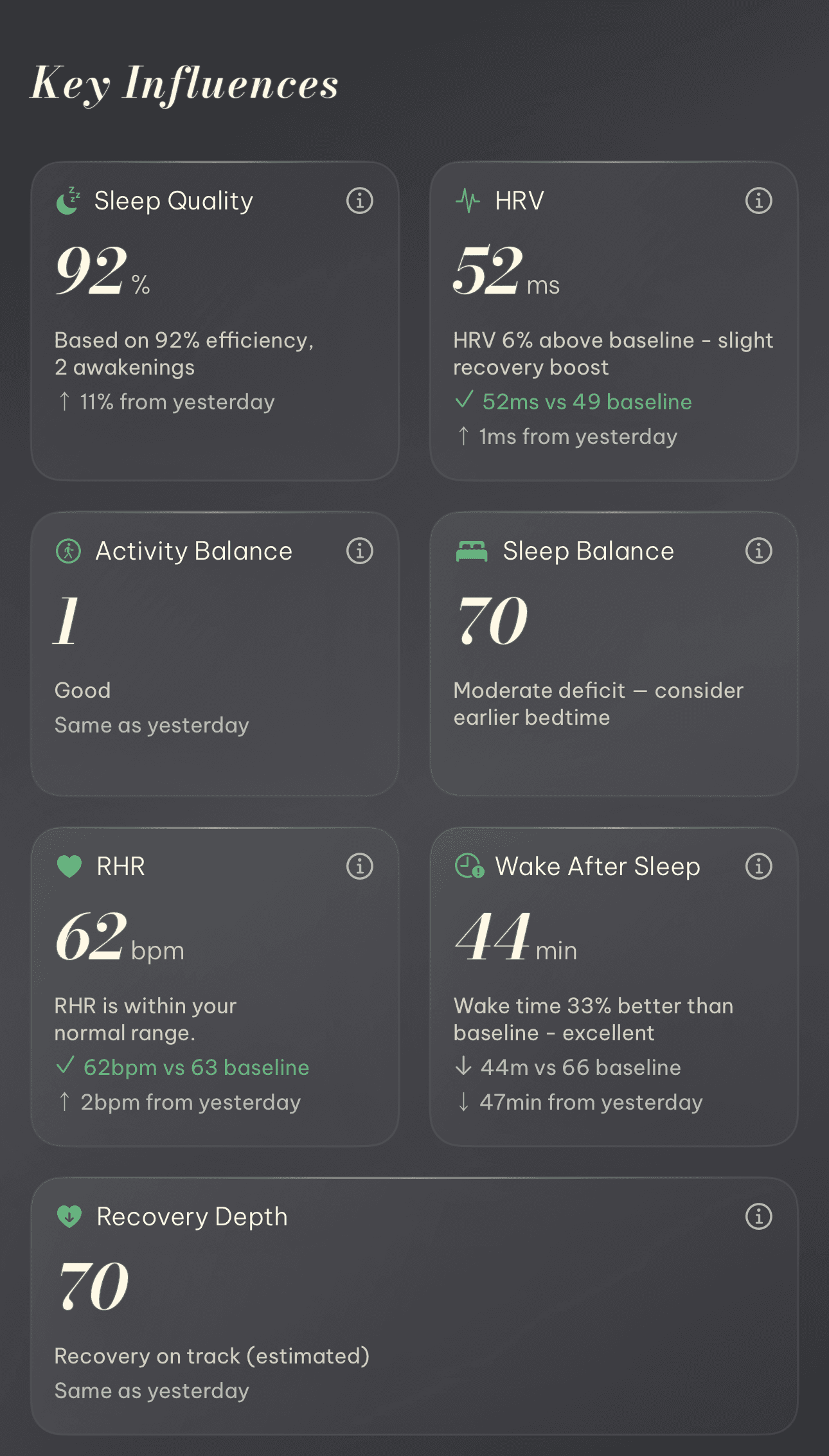
Your Apple Watch already collects what matters: heart rate variability, sleep stages, resting heart rate, workouts. PeriClue adds the layer that's missing. It reads your sleep, your cycle phase, your medications and your personal baselines together. No new hardware. No wearable subscription. Just software that makes the watch you own much smarter.
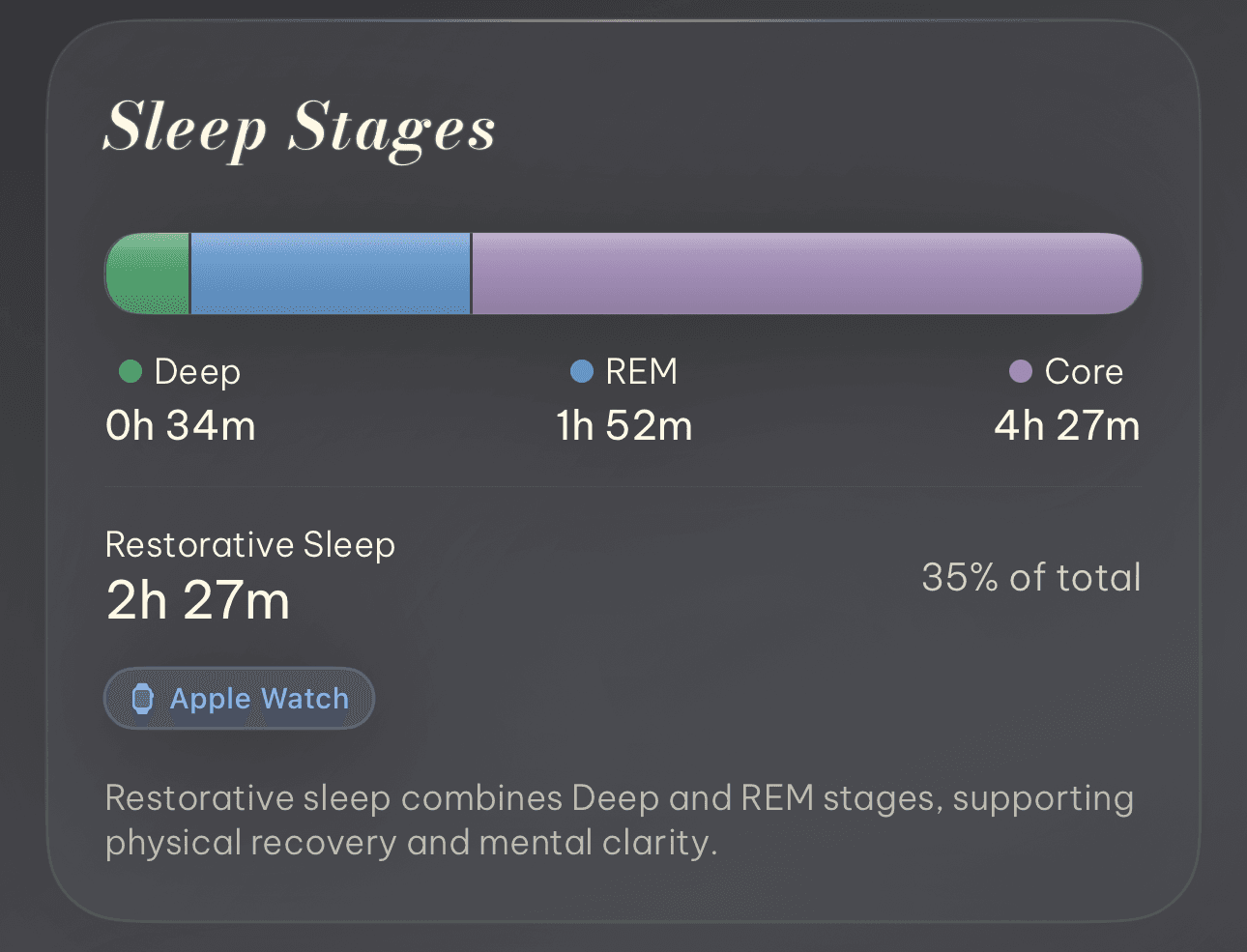
Where a standard app sees “4 awakenings” and moves on, PeriClue asks: when did they happen? How did they break up your deep sleep? Were you in the luteal phase? Does this match the pattern from your last three cycles?
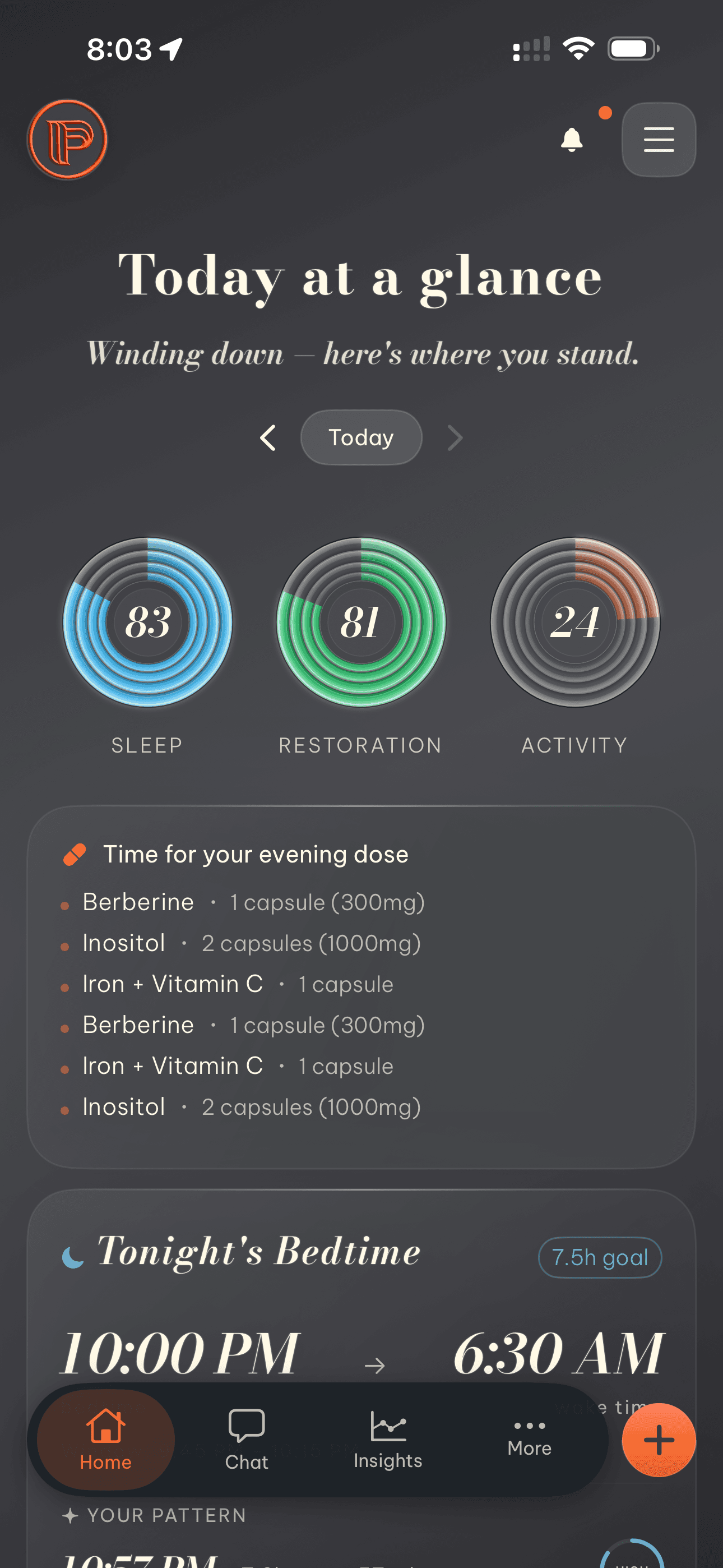
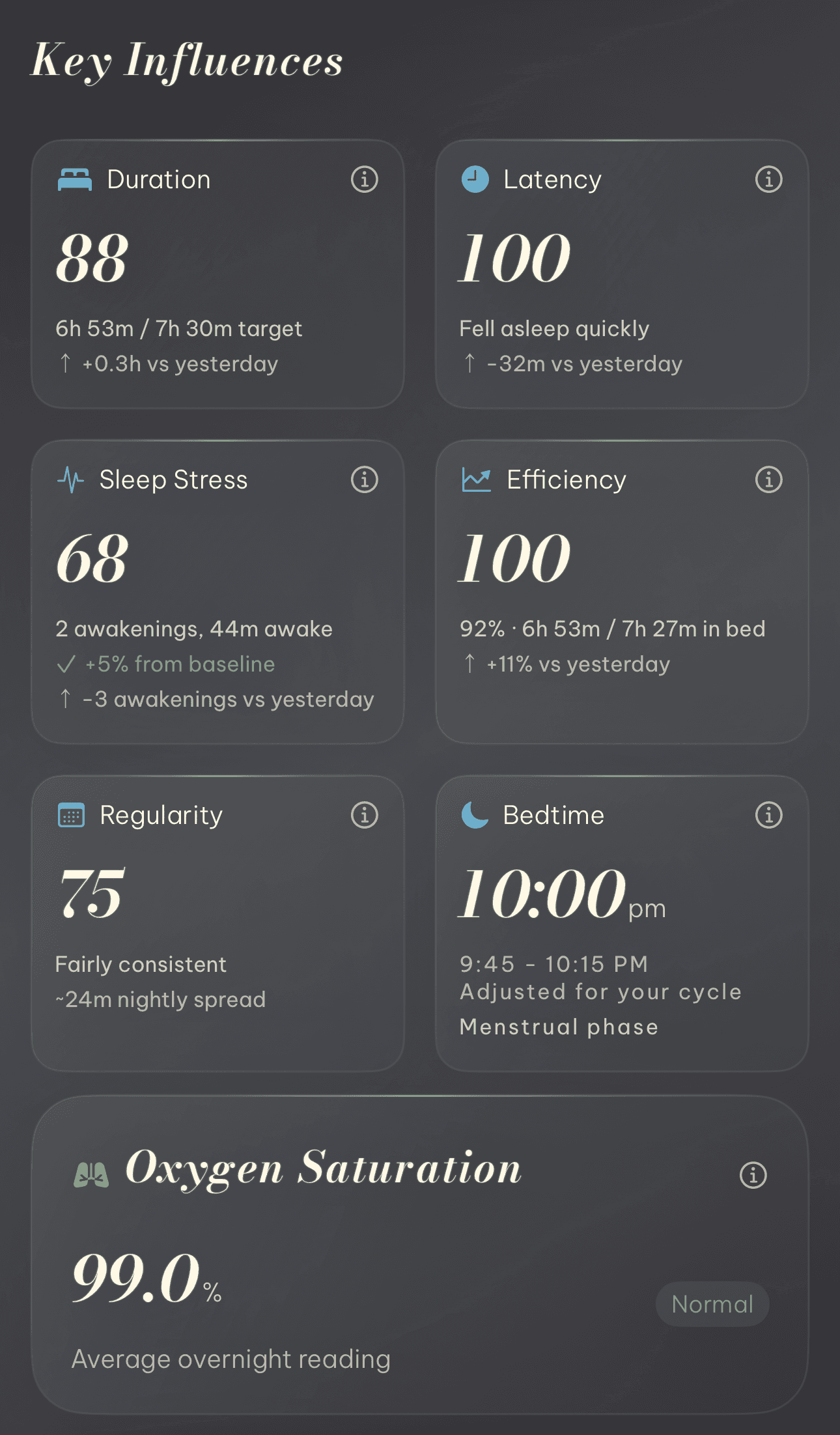
Sleep. Recovery. Activity. Cycle. Symptoms. Nutrition. Supplements. Labs. Weather. All read together, against your own baseline and where you are in your cycle.
01
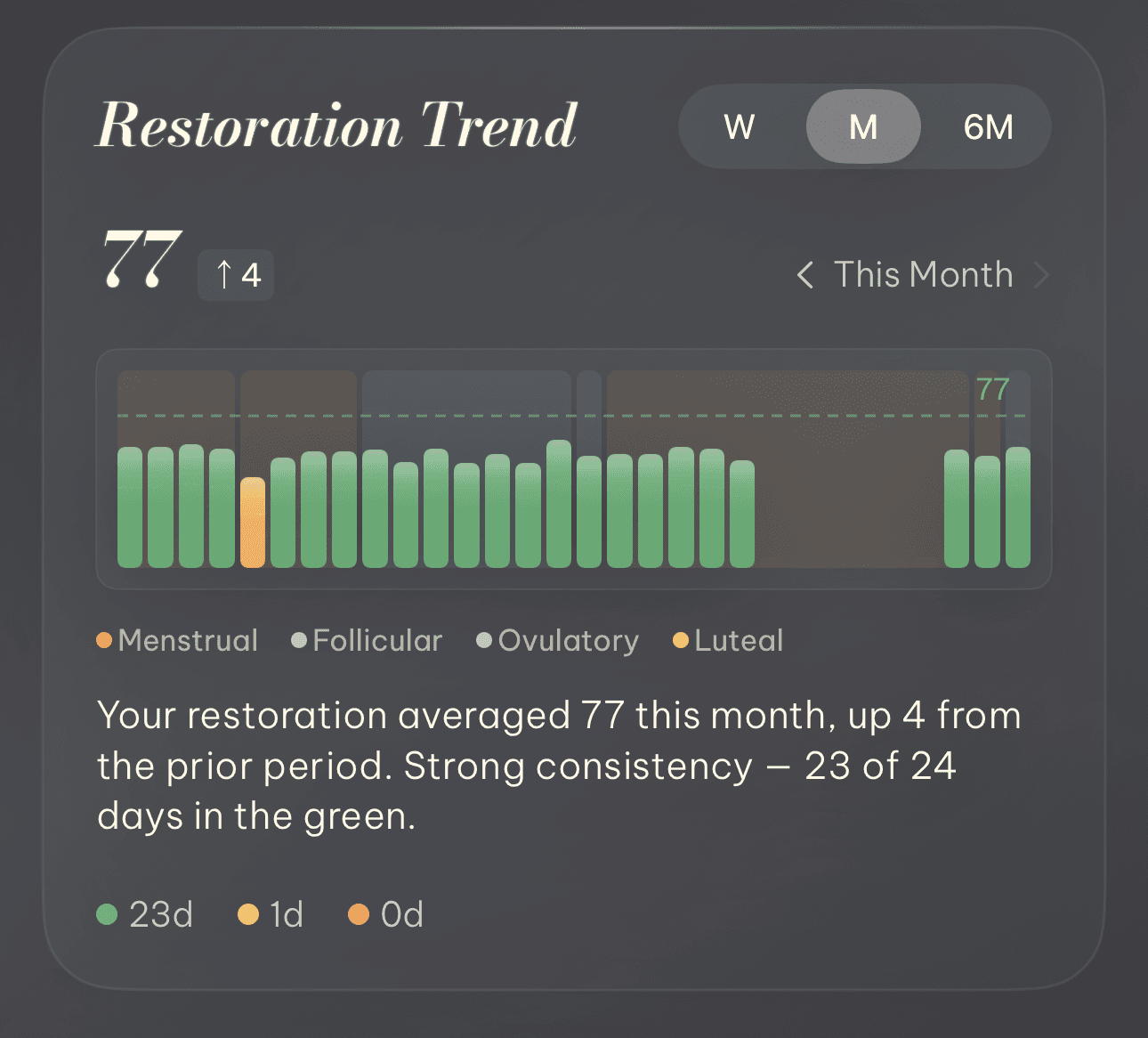
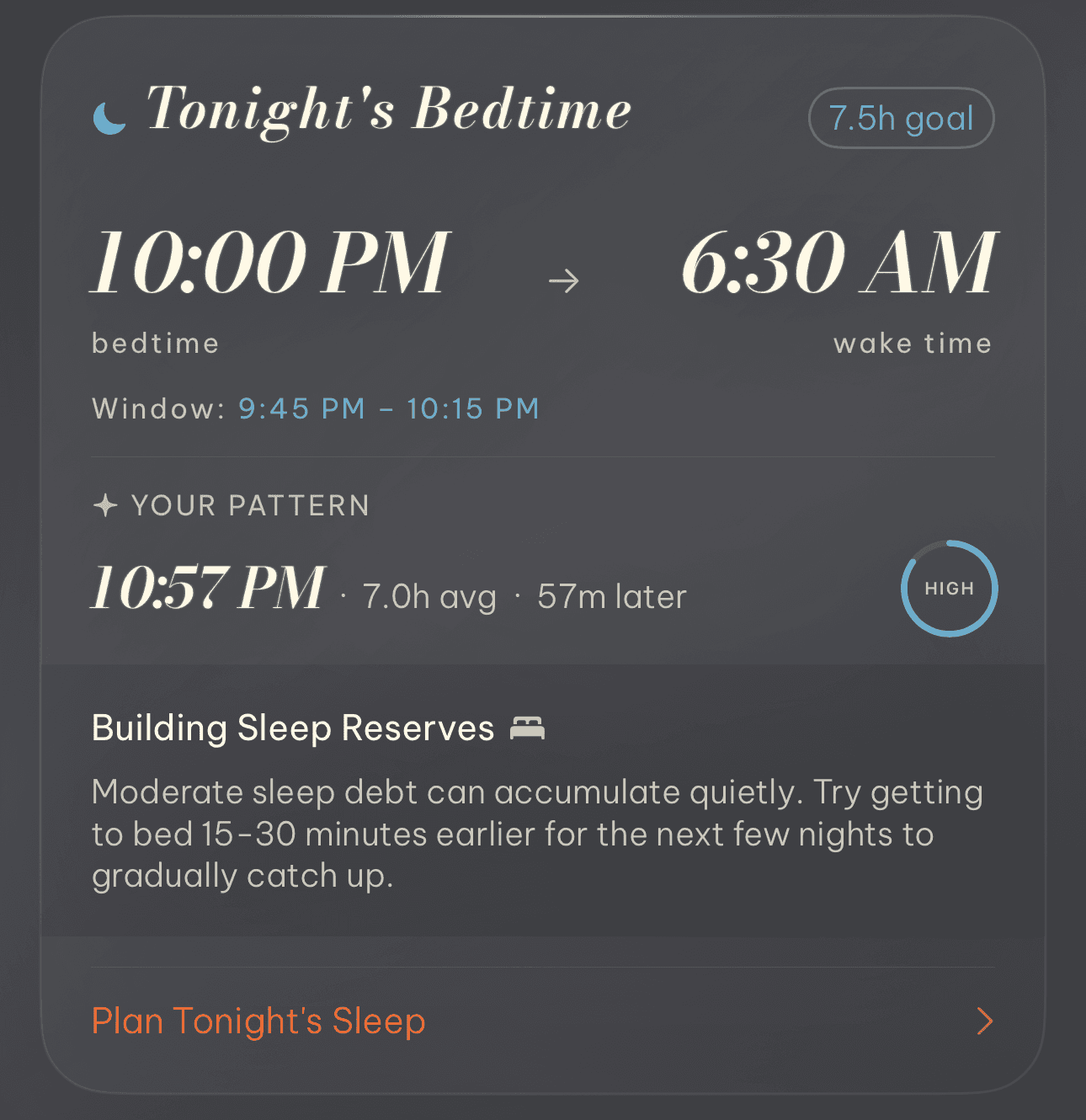
Sleep stages. Recovery. Workouts. An adaptive bedtime. Your cycle. Symptoms. Meals. Supplements. Lab results. In one place, all read in the light of your cycle and your own baseline, not a population average. Even your workout heart-rate zones start from a maximum heart rate formula built for women, then adjust to your own resting heart rate.

02
Generic health apps compare you with a population average. PeriClue builds a baseline from your own data, then reads each day against where you are in your cycle, your medications and your health conditions. Your HRV the week before your period means something different from the week after. A 3am wake-up in the luteal phase means something different from one in the follicular phase. PeriClue knows the difference.

03
Your brain fog on Tuesdays. The sleep that falls apart in one part of your cycle. This week's training and tomorrow's fatigue. PeriClue checks more than 100 pairings of symptoms and everyday factors in your own data. When a link holds up, it shows you, along with how strong it is and how much data it rests on.

04
Ask PeriClue why you're exhausted, and it looks across your sleep, HRV, activity, cycle phase, supplements and symptoms at once. It has 65 tools for reading your data, and it draws on PeriClue's library of perimenopause research. Not a chatbot with health tips. A companion that knows your numbers.

05
Starting magnesium? Log it, and PeriClue follows your sleep, HRV and symptoms over the next cycles, so you can see what changed alongside it. Upload a lab report and keep every marker in one place. Turn your doctor's notes into a plan you can track. Then bring it all to your next appointment in one clear summary.

Free to download. One subscription unlocks everything.
Yearly
$89.99 a year
14 days free, then $89.99 a year. About $7.50 a month.
Canada: CA$119.99 a year
Monthly
$9.99 a month
Billed monthly. Cancel any time.
Canada: CA$12.99 a month
Payment is charged to your Apple Account. Subscriptions renew automatically unless cancelled at least 24 hours before the end of the current period. Manage or cancel in your Apple Account settings.
PeriClue is coming to the App Store this autumn. Leave your email and we’ll tell you the day it’s live.
Built on published research, including the SWAN study, the Penn Ovarian Aging Study and the STRAW+10 staging system.
In a 2026 survey of period-tracking app users in 158 countries, women who said they were in perimenopause most often reported physical and mental exhaustion (95%) and fatigue (93%). PeriClue puts broken sleep, recovery and energy at the centre.
PeriClue does not diagnose. It puts your health data in context and points out patterns worth paying attention to. When something looks concerning, it suggests a conversation with your healthcare provider, not a self-diagnosis.
PeriClue is paid for by subscriptions, not by your data. We never sell your health data, never use it for ads, and never give it to data brokers or insurers.
Research-backed insights on what your data really means.
You've been exhausted in a way sleep does not fix. Your brain does things it never used to do. Your doctor says everything looks fine. Here is what nobody has told you yet.
The worst part wasn't the symptoms. It was the months of not knowing why they were happening.
You slept 8 hours but feel terrible. The problem isn't how long you slept. It's how many times you woke up.
Yes. PeriClue connects to Apple Health and reads the data your Apple Watch already collects. No ring, no band, no extra hardware. You need an iPhone with iOS 26 or later.
Your Apple Watch collects the data. PeriClue reads that same data alongside your cycle, symptoms, supplements and labs, against your own baseline, and looks for the links between them. It is built for the years when your body stops behaving the way it used to.
No. PeriClue works with your Apple Watch data alone. Logging symptoms like hot flashes, mood or energy gives it more to work with, but it is optional.
PeriClue is free to download. Full access is $9.99 a month or $89.99 a year in the US (CA$12.99 or CA$119.99 in Canada). The yearly plan starts with a 14-day free trial. You subscribe, and cancel, through your Apple Account.
PeriClue is paid for by subscriptions, not by your data. We never sell your health data.
You can, but it only knows what you paste in. Ask PeriClue already has your sleep, recovery, activity, cycle, symptoms, supplements and labs, with your baselines over time, and 65 tools to read them. It answers from your data, not from a general article.
No. PeriClue is a wellness tool, not a medical device. It puts your data in context and points out patterns worth paying attention to. When something looks concerning, it suggests talking to your healthcare provider.
PeriClue is coming to the App Store this autumn, in the US and Canada. Leave your email and we'll tell you the day it's live.